
The e-commerce industry is growing faster than ever. Today, customers prefer buying products online because it is convenient, fast, and secure. This rapid growth has increased the demand for e-commerce marketplace development, where multiple sellers can sell their products on a single platform.
Popular examples of e-commerce marketplaces include Amazon, Flipkart, Meesho, and Etsy. These platforms connect sellers and buyers in one place, making online shopping simple and efficient.
What Is E-Commerce Marketplace Development?
E-commerce marketplace development is the process of creating an online platform where multiple vendors can list, manage, and sell their products to customers.
Unlike a single-vendor online store, a marketplace allows:
- Multiple sellers
- Large product catalogs
- Competitive pricing
- Better customer choices
In simple terms:
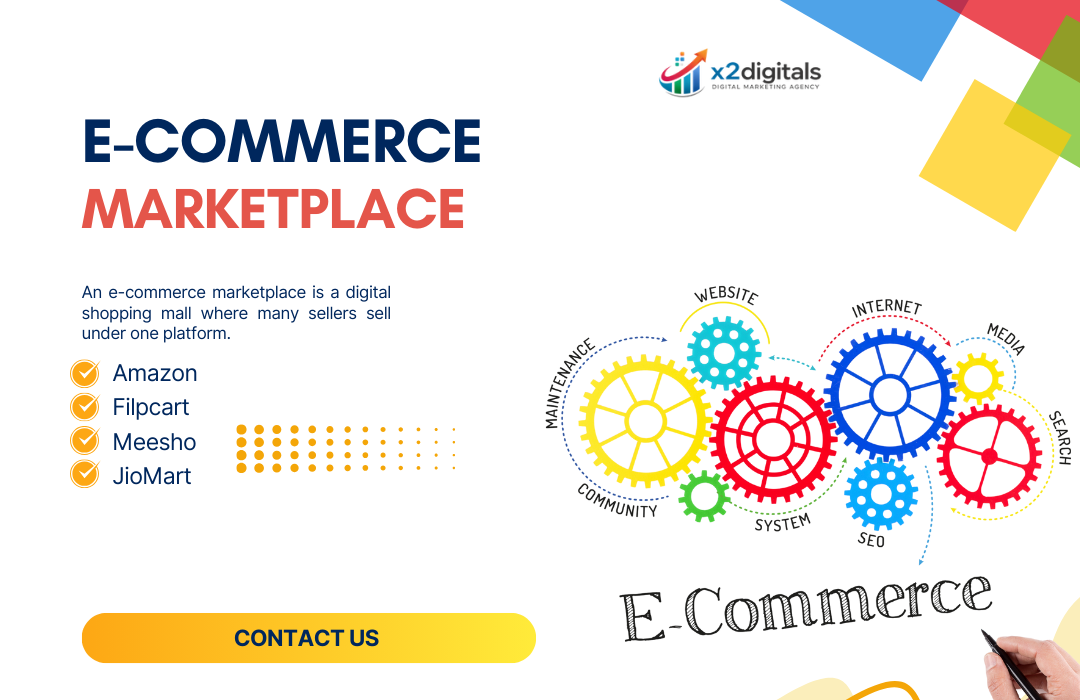
An e-commerce marketplace is a digital shopping mall where many sellers sell under one platform.
Why E-Commerce Marketplace Development Is Important
Building an e-commerce marketplace offers many business advantages. It allows faster growth without managing inventory directly.
Key benefits include:
- Increased revenue through commissions
- Scalability with multiple vendors
- Wider product range
- Better customer trust
- Strong brand presence
Marketplace models are ideal for entrepreneurs who want to build large, scalable online businesses.
Key Features of an E-Commerce Marketplace
A successful e-commerce marketplace must include essential features for both sellers and buyers.
1. Vendor Management System
This allows sellers to register, upload products, manage orders, and track earnings easily.
2. Product Listing and Catalog Management
An organized product structure helps users find products quickly using categories, filters, and search options.
3. Secure Payment Gateway Integration
Secure online payments are critical. Multiple payment options increase customer confidence and conversion rates.
4. Order and Shipping Management
Automated order tracking and shipping updates improve the customer experience.
5. Admin Dashboard
The admin panel allows platform owners to manage vendors, commissions, payments, and overall platform performance.
Technologies Used in Marketplace Development
Modern e-commerce marketplace development uses advanced technologies to ensure speed, security, and performance.
Common technologies include:
- Front-end: HTML, CSS, JavaScript, React
- Back-end: PHP, Node.js, Python
- Databases: MySQL, MongoDB
- Platforms: Shopify, Magento, WooCommerce
Choosing the right technology depends on business size and future scalability.
SEO and E-Commerce Marketplace Development
SEO plays a major role in the success of an e-commerce marketplace. A well-optimized marketplace attracts organic traffic and reduces paid advertising costs.
SEO-friendly development includes:
- Clean URL structure
- Fast page loading speed
- Mobile-friendly design
- Optimized product pages
- Schema markup for products
Search engines prefer marketplaces that offer a smooth and secure user experience.
Importance of Mobile-Friendly Marketplace Design
Most online shoppers use smartphones. That is why mobile-friendly marketplace development is essential.
Benefits include:
- Higher mobile conversions
- Better Google rankings
- Improved user engagement
- Lower bounce rates
A responsive marketplace design ensures consistent performance across all devices.
E-Commerce Marketplace Development for Business Growth
Marketplace platforms allow businesses to grow faster by adding more sellers instead of managing inventory. Revenue is generated through commissions, subscriptions, and featured listings.
This model reduces risk and increases profit potential, making it highly attractive for startups and enterprises.
Future Trends in E-Commerce Marketplace Development
Some emerging trends include:
- AI-powered product recommendations
- Voice search optimization
- Multi-vendor mobile apps
- Faster checkout experiences
- Advanced analytics and reporting
Adopting modern trends helps marketplaces stay competitive.
Conclusion
E-commerce marketplace development is a powerful business model for the digital economy. A scalable, secure, and SEO-optimized marketplace connects sellers and buyers efficiently while generating long-term revenue.
With the right strategy and technology, an e-commerce marketplace can become a highly profitable and sustainable online business.